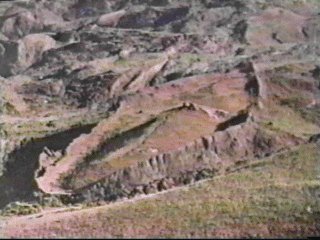
 A boat-shaped formation called
the Durupinar site
was discovered more than 40 years ago from
aerial photographs
published in a Life Magazine Article in 1960. There are some Creationists,
such as the now deceased Ron
Wyatt, who believe this boat-shaped mound is the remains of Noah's
ark. The site has been declared a national park by the Turkish government,
and is now equipped with an
official museum.
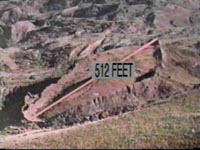
There are several compelling pieces of evidence suggesting it to be the
ark built by Noah including the fact that it closely matches the Biblical
description of its length.
A boat-shaped formation called
the Durupinar site
was discovered more than 40 years ago from
aerial photographs
published in a Life Magazine Article in 1960. There are some Creationists,
such as the now deceased Ron
Wyatt, who believe this boat-shaped mound is the remains of Noah's
ark. The site has been declared a national park by the Turkish government,
and is now equipped with an
official museum.
There are several compelling pieces of evidence suggesting it to be the
ark built by Noah including the fact that it closely matches the Biblical
description of its length.
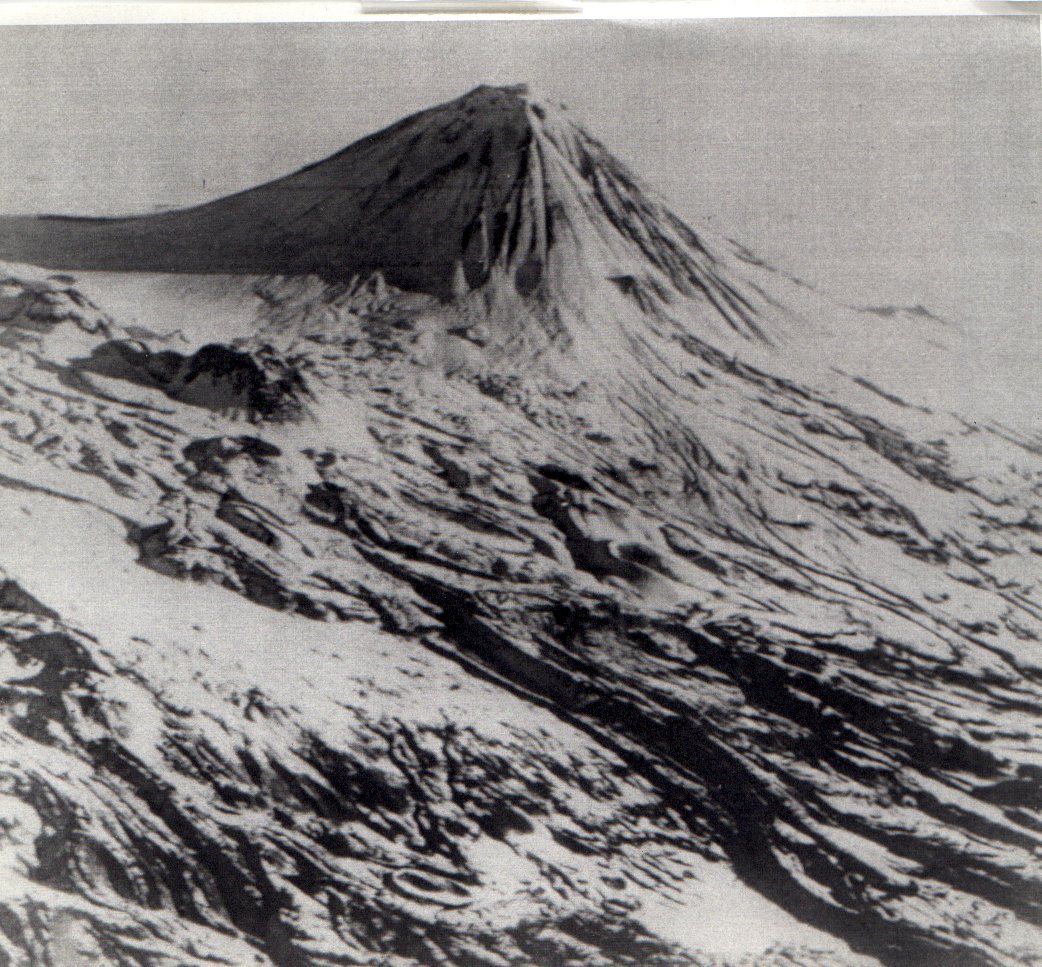
The unusual geologic formations in the region of the Durupinar site are
apparently the result of mudflows. Mudflows are a typical feature of
volcanic mountains that have risen to an elevation that causes glaciation
of the peak. Subsequent eruptions or volcanic activity will melt the
glacier and induce rapid deposition and erosion at the foot of the
mountain, such as those that occurred at Mt. St.
Helens. It is most likely that the ark of Noah has decomposed
completely since the flood, however, if it were buried under such a
mudflow, it could possibly have been petrified beneath. Unfortunately,
excavations through industrialization are not likely to happen in such a
remote region, and if buried its discovery may never occur unless exposed
by a major natural erosion event.
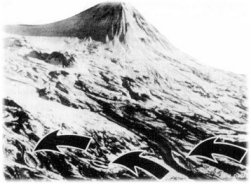 The
picture to the right is very telling of the Durupinar site. Although the
shape of this find is very unusual, it is not unique to the region. There
are other similar formations nearby and all are apparently the result of
solidified mudflows. The arrows in the referenced photo point to similar
boat shapes formed in the nearby topography. A
much larger version of this picture can also be found seen. It should
also be noted that most creationists do not believe
the Durupinar site is the ark. It is best to view this discovery with
skepticism until a complete excavation can be performed.
The
picture to the right is very telling of the Durupinar site. Although the
shape of this find is very unusual, it is not unique to the region. There
are other similar formations nearby and all are apparently the result of
solidified mudflows. The arrows in the referenced photo point to similar
boat shapes formed in the nearby topography. A
much larger version of this picture can also be found seen. It should
also be noted that most creationists do not believe
the Durupinar site is the ark. It is best to view this discovery with
skepticism until a complete excavation can be performed.