

Genetics and Creation
...the odds against DNA assembling by chance are1040:1
[according to Fred Hoyle, Evolution from Space,1981].
Introduction
The living cell provides our greatest
example of intelligent design. Within its confines resides a molecular
machinery largely beyond our comprehension. The complexity of the cell may
very well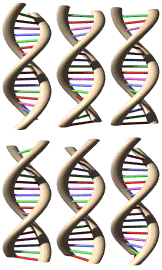 exceed that of the universe outside of our world, and yet there
are those who can believe it simply formed through random processes .
exceed that of the universe outside of our world, and yet there
are those who can believe it simply formed through random processes .
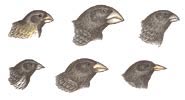
The scientific community has become largely atheistic and generally assumes that cells formed without God or intelligent design. Therefore existing genetic theories have been developed by those who do not believe the cell was designed, and are not looking for mechanisms that were made to intentionally produce the genetic changes which allow organisms to adapt. Secular science believes that evolution is largely the result of biochemical accidents. Although geneticists and breeders have thoroughly established that genetic recombination is responsible for the variations of plant and animal breeds, we are still taught that random mutations produced the natural varieties of species such as the finches on the Galapagos islands. This contrast between fact and teachings is the result of atheistic theoretic necessity, which must propose that random reactions unreliant upon living systems are responsible for evolution.
Mutations or Genetic Recombination?
There are two sources of genetic variability; genetic recombination and mutation. Mutations are random, unintentional nucleotide alterations that can occur in many ways, such as by errors during replication, or by exposure to chemical mutagens. Genetic recombination, on the otherhand, is performed intentionally by cellular machinery and its products remains largely uncharacterized. Both mutation and recombination can modify genes, but we are being incorrectly taught that mutation is the primary source of variability driving evolution.
Little is known about recombination, except that reactions occur between chromosomes, which alter the genome of each daughter cell so no two offspring are ever identical. Given our level of understanding, we can not yet place a limitation on their ability to manipulate DNA. It is clear the genetic constitution of organisms is not static, and the cell's molecular machinery is altering genes and creating new alleles with each passing generation. The purpose of these reactions is clear. They occur so that organisms would be able to adapt physically and biochemically, and thereby occupy earth's broad range of habitats.
 It has been recognized for decades that the differences
found among offspring from the same parents were the result of
recombination events during meiosis. Domestic breeds, for example, are
recombinants, not mutants. These rearrangements are being performed by
design to provide evolutionary potential to all organisms. Contrary to
popular beliefs, evolution through recombination is not random, but is
instead highly systematic. In comparison, mutations are random destructive
changes that destroy information. Mutations are most typically
deleterious, disruptive to genome function, and corrected by the cell when
detected. Evolution truly occurs through a history of genetic
recombination and natural selection, but the way it is taught, you would
never know anything but mutation was involved.
It has been recognized for decades that the differences
found among offspring from the same parents were the result of
recombination events during meiosis. Domestic breeds, for example, are
recombinants, not mutants. These rearrangements are being performed by
design to provide evolutionary potential to all organisms. Contrary to
popular beliefs, evolution through recombination is not random, but is
instead highly systematic. In comparison, mutations are random destructive
changes that destroy information. Mutations are most typically
deleterious, disruptive to genome function, and corrected by the cell when
detected. Evolution truly occurs through a history of genetic
recombination and natural selection, but the way it is taught, you would
never know anything but mutation was involved.
Evolution vs Creation
The theory of evolution owes its' inception to the existence of the fossil record and the fact that organisms adapt and change through time. The fossil record convinced early scientists that the earth was much older than previously thought, and animals have changed so tremendously that theoretically anything is possible. God has provided all organisms with the mechanisms necessary to modify their own genomes so they may adapt to almost any possible habitat. The evolution that has occurred, did so through cellular performed genetic recombination which functions by design. However, we do not yet understand these rearrangements well enough to limit their ability, nor the extent mutations may be tolerated as a source for new information. The molecular machinery is still largely beyond our comprehension, and the evolutionary potential exhibited through classic breeding has demonstrated a range that makes it truly difficult to specifically determine the Biblical kinds.
A significant amount of evolution has occurred, but life on earth requires the simultaneous coexistence of numerous types of organisms, which is exactly what the Bible says God created. It is generally accepted by creationists that the species common to any particular mammalian Family have evolved through basic genetic recombination and selection. Each species released from the ark has essentially evolved into many unique genera with several species each. This quantity of evolution is what the evolutionists refers to as macroevolution because taxonomic groups above the species have developed. However, the fossil record does not itself offer proof of evolution beyond that evident in living population. These layer have most certainly been misinterpreted, and without their evidence, nothing more than variations within the Biblical kinds has been established.
If the evolutionist is correct, then we are just another animal. But it is possible we are the result of a special creation, and destined to live toward a much greater goal. Examine this issue carefully, and recognize that all secular scientific theory has a presuppositional basis in atheism which at times forces a conclusion against the obvious. This debate is ultimately between a naturalist and a super-naturalist with the former demanding the presentation of only naturalist evidence. The creation position begins with Biblical insight and supernatural events which the scientific community must reject as possible explanations. They will never determine the truth because they will only accept natural history of a world that has a supernatural past.
Conclusion
Contrary to what evolutionists teach, adaptation is the result of systematic and intentional cellular reactions. However, in contrast to typical creationist perceptions, this change is not limited to the variability originally possessed by the organism. God created a cellular machinery that is performing a level of self genetic engineering. This process is creating new information and able to modify organisms so dramatically we can frequently not recognize them as related. The physical manifestations of these reactions is hard to predict, and it is also quite possible that genetic editions are being made in direct response to environmental demands.
Additional Reading
- What's Driving Evolution? Mutation or Genetic Recombination
- Genetic Variability by Design by Chris Ashcraft. Journal of Creation 18(2) 2004
- Are There Genetic Limits for Evolution?
- Gene Hijacking: The Role of Interspecies Gene Transfer
- Creationist Links
- News
- Quotes